If you’re planning a Vicksburg Civil War trip, you’re not just visiting another historic Southern town; you’re at the site of one of the most important turning points of the entire war. The siege of Vicksburg reshaped the United States, split the Confederacy in two, and secured control of the Mississippi River for the Union. Even today, Vicksburg is a place where history surrounds visitors. From preserved trenches at Vicksburg National Military Park to historic homes that once served as hospitals, the city offers one of the most immersive Civil War experiences in the country.
Beyond Vicksburg Civil War landmarks, there are plenty of other memorable things to do in Vicksburg MS. The city has a thriving arts scene, with colorful murals along the Mississippi Riverfront that tell the broader story of Vicksburg’s history. Exploring the Lower Mississippi River Museum gives insight into river commerce, while the riverfront casinos allow visitors to try their luck. There is a great mix of classic Southern restaurants and modern dining spots, and sunset views over the Mississippi River are a lovely way to end the day. Vicksburg may be best known for its role in the Civil War, but the food and culture make it a great destination.
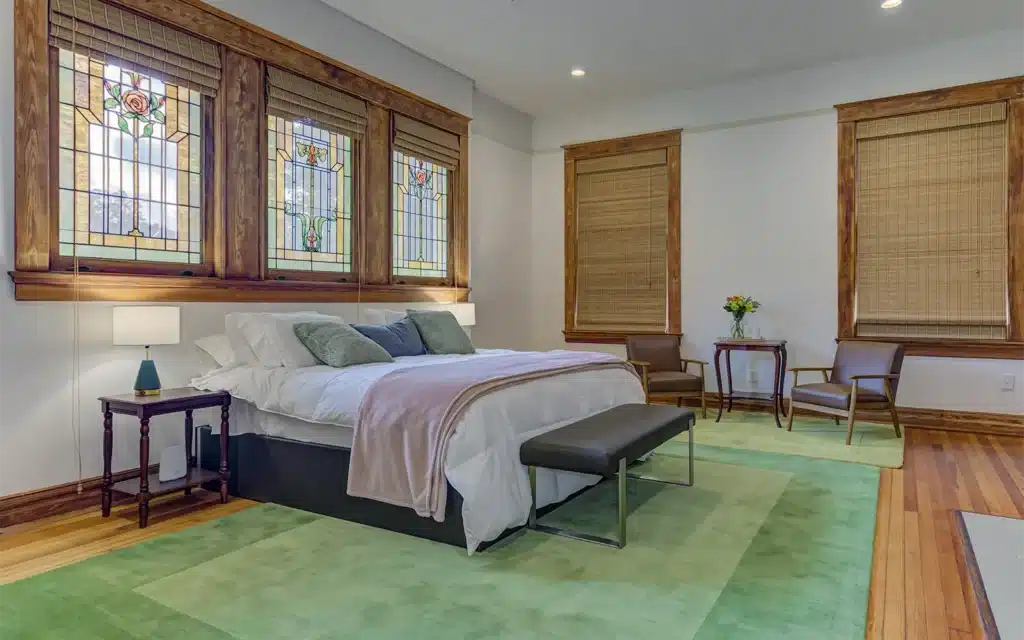
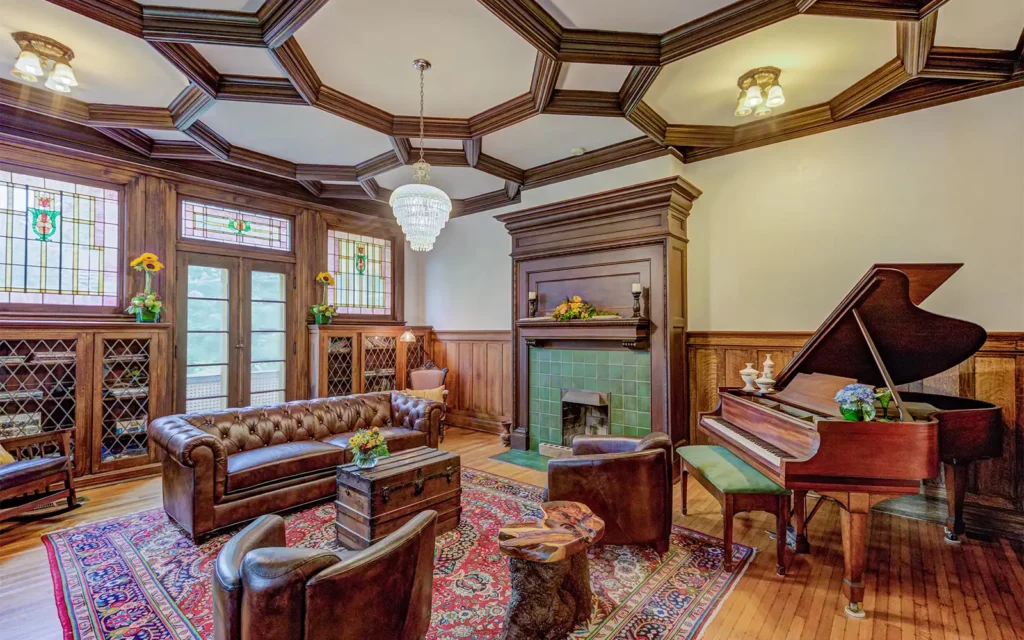
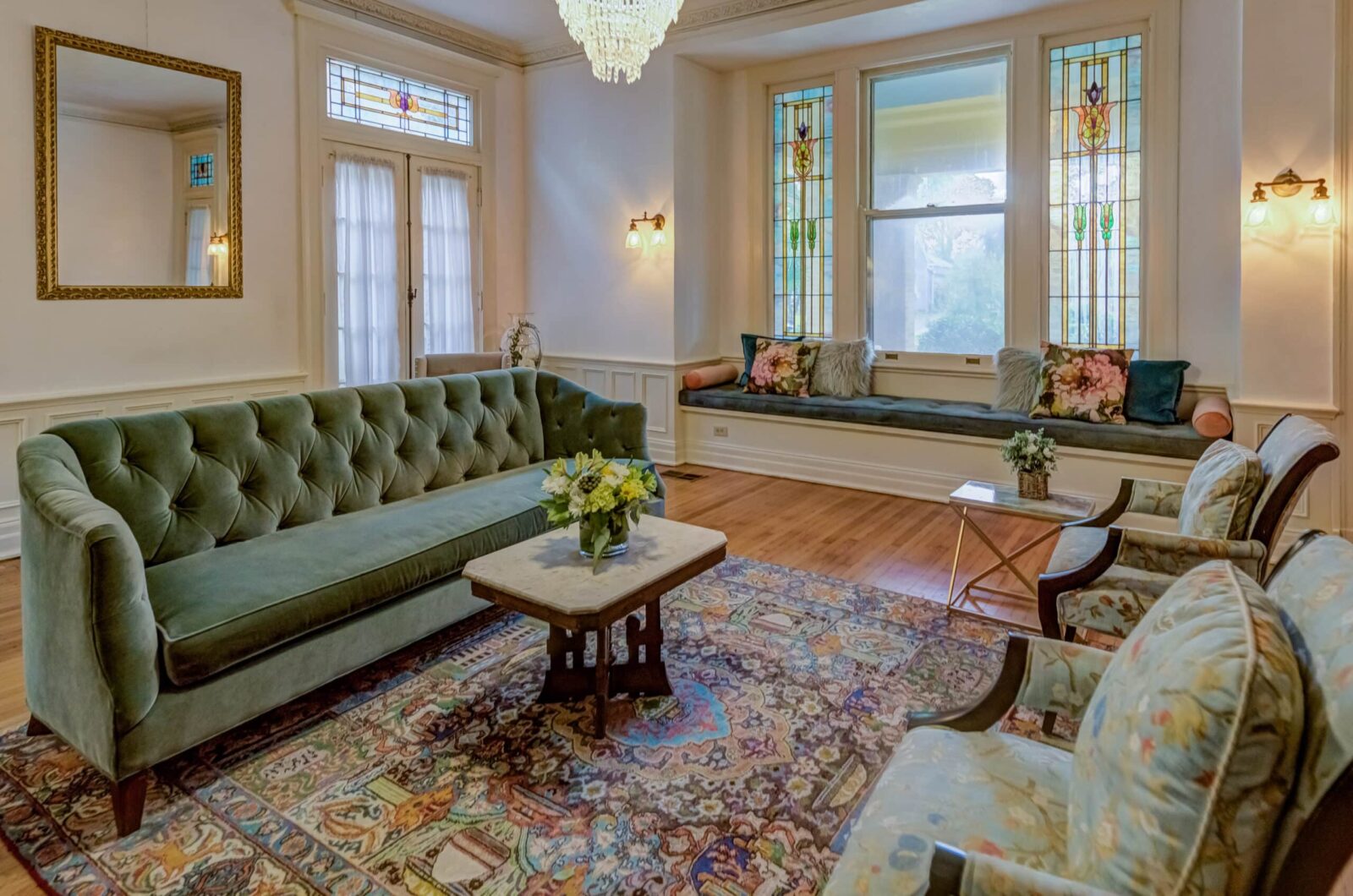
After a full day exploring Vicksburg Civil War landmarks, returning to a quiet, historic Hotel near the Vicksburg Battlefield is a welcome retreat. Oak Hall is a 1910 Mission Revival mansion with original stained-glass windows and beautifully preserved woodwork. Our Hotel has been thoughtfully restored with modern comfort in mind. Each guest room is private and luxurious, designed for true relaxation. Book your stay today.
The Vicksburg Civil War Story
Vicksburg’s role in the Civil War is impossible to overstate. During the war, the city was a Confederate stronghold, positioned halfway between Memphis and New Orleans, high above the Mississippi River. That location made it one of the most strategic points in the entire conflict. Whoever controlled Vicksburg controlled the river, and whoever controlled the river controlled the most important transportation and supply route in the South. From Cairo, Illinois, to the Gulf of Mexico, the Mississippi served as a lifeline for moving troops, weapons, food, and supplies.
Because of that, Vicksburg became central to the Union’s larger strategy. Part of the Anaconda Plan was to take control of the Mississippi River and cut off Confederate supply lines. In 1861, neither side had a brown-water navy, but that changed quickly. By 1862, the War Department launched a Western Gunboat Flotilla, beginning a coordinated advance down the river. Many of the most significant Civil War battles in Mississippi focused on transportation routes, including railroad hubs like Corinth, where control of rail lines meant control of movement.
General Ulysses S. Grant understood that capturing Vicksburg was the key to splitting the Confederacy in two. His campaign into Mississippi began with the Battle of Port Gibson, which opened the way for Union forces to move inland. Shortly after, the Battle of Jackson resulted in Union forces capturing the state capital and disrupting Confederate supply lines. These victories tightened pressure on Vicksburg and weakened the Confederate position before the main assault even began.
The defining moment came with the Siege of Vicksburg, lasting from May 18 to July 4, 1863. Grant’s army, numbering around 70,000 troops, surrounded Confederate Lieutenant General John C. Pemberton’s 29,000 men. Nearly 15 miles of trenches enclosed the city, turning the Vicksburg Battle into a prolonged and relentless campaign. Confederate rescue attempts from both east and west failed, and as the Vicksburg Civil War siege dragged on, conditions inside the city deteriorated rapidly.
For residents, Vicksburg was not just a military objective; it was home. Citizens dug more than 500 caves into the hillsides to escape artillery fire, living underground for weeks at a time. Union soldiers nicknamed the city the “Prairie Dog Village.” Homes were converted into hospitals and headquarters for generals. Families lived under constant bombardment.
As supplies ran out, starvation and disease spread. Confederate forces seized much of the community’s food early on, and by the end of the siege, citizens were reduced to eating whatever they could find, including mules and even cats. The local newspaper famously printed editions on wallpaper when newsprint was unavailable. In 1863, when food supplies ran out during the Vicksburg Civil War siege, black-eyed peas became one of the few remaining staples. That moment is widely connected to the Southern New Year’s tradition of eating black-eyed peas for good luck.
After 47 days under siege, Pemberton surrendered on July 4, 1863. The timing amplified its significance, coming immediately after the Union victory at Gettysburg. If you’ve ever wondered who won the Battle of Vicksburg, the answer is the Union. Control of the Mississippi River was secured, the Confederacy was effectively split in two, and momentum shifted decisively. President Lincoln later referred to Vicksburg as the “Key to the South,” and history proved him right.
The human cost was staggering. Across the full campaign, casualties totaled roughly 37,500. Vicksburg had been a Confederate citadel guarding a vital supply line, and its fall marked a turning point in American history. The war would not officially end until May 4, 1865, but the Battle of Vicksburg Civil War campaign made the outcome far more certain.
Vicksburg Civil War Sites to Visit
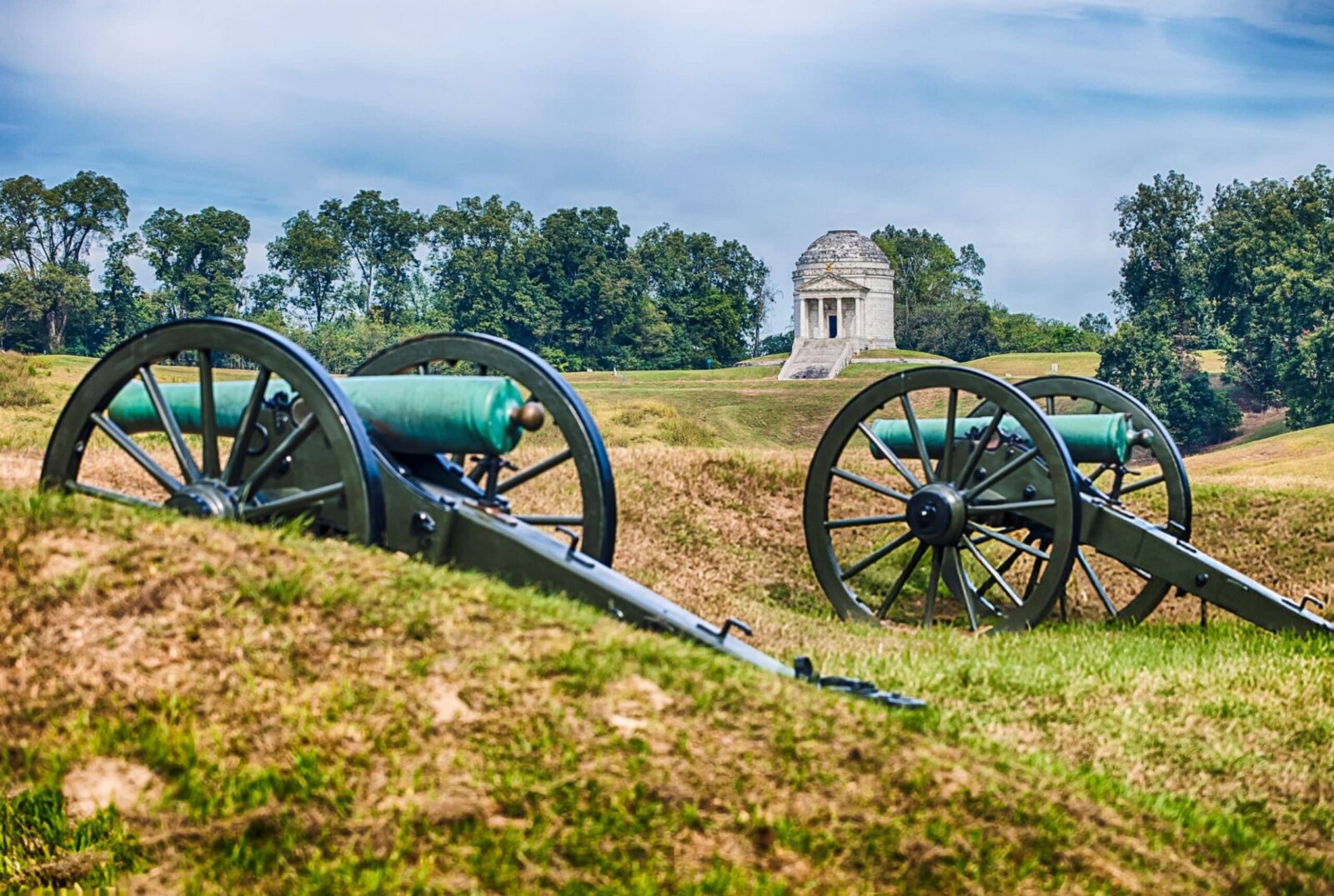
Today, that history is preserved at Vicksburg National Military Park, established by Congress in 1899. The park protects large portions of the Vicksburg Battlefield and remains one of Mississippi’s most significant historic sites. Visitors can explore monuments, preserved earthworks, and the Vicksburg National Cemetery, where thousands of soldiers, including more than 13,000 unknown, are laid to rest. The USS Cairo, an ironclad gunboat recovered from the Yazoo River, offers insight into how river warfare evolved during the conflict.
For travelers building a list of things to do in Vicksburg MS, the experience goes beyond the battlefield. Visiting the Vicksburg Civil War Museum, driving through Vicksburg Military Park, and touring preserved homes throughout the city offer a deeper understanding of life during the siege.
Several notable wartime homes remain open to visitors today. Duff Green Mansion and Cedar Grove both served as field hospitals, and Cedar Grove still bears visible cannonball scars. The Shirley House is the only surviving wartime residence in Vicksburg National Military Park, offering a rare and personal glimpse into civilian life in 1863.
A visit to Vicksburg stays with you. Between the monuments and preserved earthworks of Vicksburg National Military Park, the stories inside the Vicksburg Civil War Museum, and the historic homes scattered throughout the city, it’s easy to understand why Vicksburg’s history continues to draw travelers from across the country.
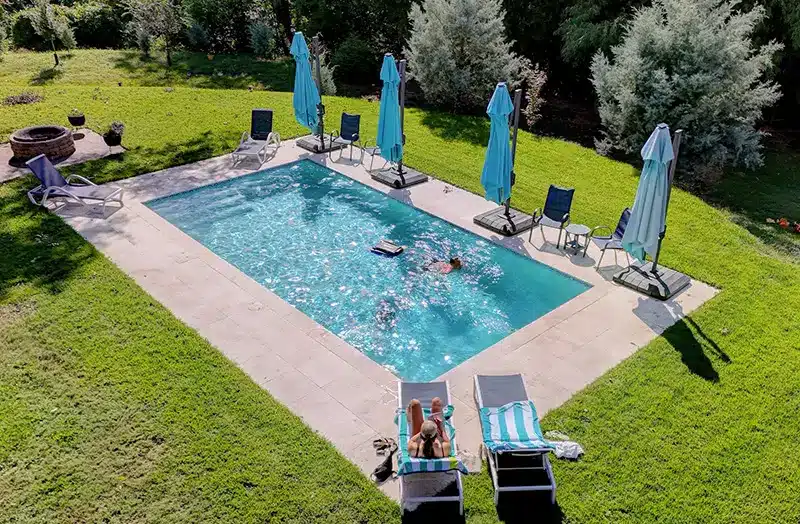
After a full day exploring the Vicksburg Battlefield, returning to a quiet Hotel offers space to reflect. Our Historic Hotel near the Vicksburg Battlefield is an elevated lodging property with a stocked Butler’s Pantry, a saltwater pool, and personalized hospitality that is thoughtful and refined. It’s a stay that honors the history around you while offering modern comforts. Reserve your room now!